Friday, February 26, 2010

How do I stop the scientists talking?

I'm at the LikeMinds conference here in Exeter today talking about social media. I'm not amoung my people, the room is mostly filled with marketing and public relations types. While I'm sure I'm not the only techie here, I may be the only professional scientist...


But what I didn't expect to here this morning was a question from the audience during the social strategies panel with John Bell, Maz Nadjm, Charlie Osmond and Gemma Went, "...how can I stop my scientists talking online?"
@aallan "...stop scientists talking"?! Why do they want to do that? Do they worry the Internet might be full?
  @astronomyblog via web in reply to @aallan
The issue seems to be that those naughty scientists are talking about restricted intellectual property between themselves without proper oversight from management types. Oh dear, we might come up with ideas and solve problems without the right paperwork getting done..?

Have they heard of the printing press, and peer-reviewed journals? Science, rather than the scientists themselves, have a problem with restricting communication. Science can't happen without communication. You only have to look at the how science was done before peer-review journals became prevalent, when theories were published first as anagrams, to realise how the velocity-of-change of technological and scientific progress depends crucially on open communications.

We talked about this at the .Astronomy meeting in Leiden at the tail end of last year, but crucially we weren't talking about stopping scientists talking. We were talking about how to make it easier, to make it open...


Michael Nielsen - Reinventing Discovery

...Michael Neilson's talk was about the future of science and how to build a collective future for all of us, and combat the silo mentality that this question of how to "...stop scientists talking" exemplifies.

You have to wonder if this person was worried about today's social media, what she'll think of open science, open data access, and .Astronomy's project #zombie...

The LikeMinds Conference

I'm in Exeter today. Well, I'm in Exeter quite a lot after all, but today I'm at the Exeter Convention Centre for LikeMinds conference. If you're not lucking enough to be here, you can watch the live stream or follow-along on Twitter...

Live streaming video by Ustream


Update: My response to the question, "...how can I stop my scientists talking online?"

Update: Some photographs from Like Minds.

Sunday, December 13, 2009

Let the presses roll

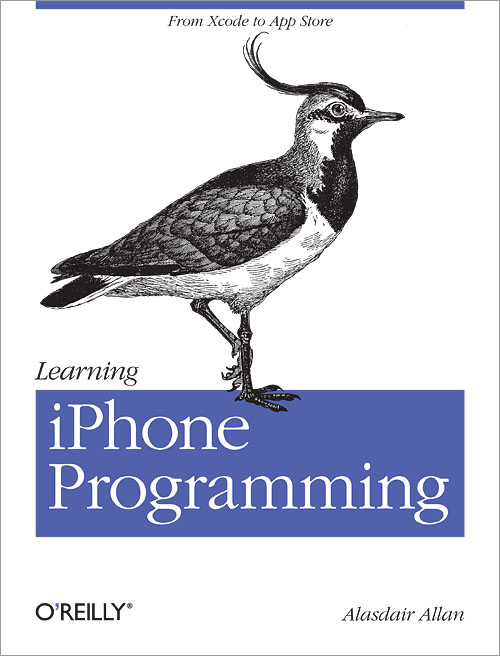
As some of you probably know I've spent the last few months writing a book on programming for the iPhone and iPod touch platform for O'Reilly Media. Late last night my editor emailed me to say that my final draft has just been pushed out the door to production...


I've pulled together some supporting material for the book. Including a couple of screencasts walking you through building the example applications from chapter 10 and chapter 11 of the book, some sample code and the slides from my keynote presentation at the Where 2.0 Online Conference on iPhone Sensors.

Learning iPhone Programming is available now online in Rough Cuts through O'Reilly's Safari Book service, and should be in stores by the middle of March.

What better Christmas present for the geek in your life..?

Monday, November 30, 2009

The .Astronomy Conference

I'm in Leiden this week at the Lorentz Centre for the .Astronomy Meeting. If you're not lucky enough to be here, we're streaming the mornings live so you can sit in on the talks...

Live TV : Ustream

Sunday, November 15, 2009

Coding from camelback

The term digital nomad is starting to break into the mainstream. To some it's all about work from anywhere; your local library or coffee shop, the hotel pool, a co-working space. But lately it seems that anywhere has become a much broader term. Sell your house, your car, your furniture, pack your bags and buy a ticket to somewhere, anywhere, that isn't here. The plan is to earn a first world salary by telecommuting, but pay third world prices for food and shelter.

The nomand's lifestyle is defined not by how many hours a day they're online, but by when they're not. Emily Davidow has it right,
Last weekend, an uncle asked me “How many hours a day do you go online?” I looked up from my iPhone and repeated the question out loud several times... “All of them,” my wise brother answered. “She doesn’t go online, she just is.” Uncle seemed confused and more than a little worried. - Emily Davidow
I've been a semi-nomad for the last decade, I didn't sell my house or my car and just go. I've always had somewhere to come back to, but I've travelled a lot. At the peak, a few years back now, I was spending six to nine months of the year out of the country. Although over the last year or so, for obvious reasons, I've scaled back the amount of travel I'm doing, I must admit I sometimes have a wistful thought or two. Looking out a hotel window on a new view, or sitting watch the world go by, or even a quick dose of culture shock is a different life than dragging myself into the office every morning. No matter how much I enjoy what I do for a living...

However this weekend I sat on my couch at home in-front of a roaring fire as the severe weather raged outside. Surrounded by three laptops, my iPhone and an iPod touch, I was working on the second draft of my upcomimg book. I could have been anywhere in the world, but I was at home. Why? Because while I could have been anywhere in the world, I chose to be at home. After a decade of semi-nomadic existence, where else is really as comfortable?

Where 2.0 Online


At the start of December I'll be kicking off the Where 2.0 Online Conference talking about iPhone sensors. My introductory session is intended to be the foundation for the rest of the event and is based on the sensors chapter of my upcoming O'Reilly book Learning iPhone Programming. I'll be going over the sensors available and talking about how to access them, then I'll deep dive into the accelerometer and attempt to build an accelerometer based application, live on camera. I'm not sure how they talked me into that...

I'll be followed by four app developers who will each focus on the sensors they used in their respective apps. They will cover their tools, their process and their mistakes. Andreas Alfare will be talking about augmented reality, Ian Peters-Campbell will be talking about location sensors, Martin Roth about working with audio and Jeffrey Powers about computer vision.

Admittance is US$149, and participants will receive an advance copy of Chapter 10 of my book, the chapter talking about sensors, as a part of the conference fee. If you'd like to register, but you're thinking that's a bit steep, I can offer you 25% off as a "friend of the speaker", use the discount code whrfall09fsp when you register. It's should be a lot of fun, if you only to see me attempting to code on camera...

Wednesday, October 28, 2009

Stack Overflow Dev Day

Stackoverflow.com is a free collaboratively built and maintained programming Q&A site, and if you haven't heard about it already, you should have done. It's pretty much my first call now for those obscure programming questions that come up from time-to-time, and the community that's grown up around the site is pretty solid.

I'm currently down in London for the the day to attend the first UK Stackoverflow Dev Day. The conference is in the Kensington Town Hall, somewhere I haven't been since the London ADASS meeting back in 2007. Although I do remember there is a really good Lebanese place around the corner...


Waiting for the #DevDays to begin...

Along with the the intriguingly entitled talk "Humanity: Epic Fail" about half way through the day, we're covering topics ranging from Python to Android, and Qt to the iPhone.


Joel Spolsky

I's going to be a lot of fun, and you can follow along on Twitter...

Tuesday, August 25, 2009

The (lost?) Android Opportunity

At the time Apple initially released the native SDK for the iPhone some people argued that Objective-C was a poor choice as a development language. I'd now argue that either they picked the right language, or more probably (at least within reason) the platform was good enough, attractive enough to developers, that the language they chose didn't matter all that much. Developers were willing to spend the time learning Objective-C just so they could write code for the iPhone.

I wasn't a long time Mac developer when the iPhone appeared. I learned Objective-C because I wanted to develop for the iPhone, not because it was widespread, or particular popular.
What's the difference between a Cocoa developer and a large pizza? A large pizza can still feed a family of four. - Mike Lee

Although its popularity is now on the rise; the language jumped 22 places in the TIOBE index in the last year, entering the top 20 "most popular" languages for the first time.


The popularity of Objective-C as measured by its TIOBE index. Climbing from 40th position in the rankings in 2002 to 19th position this month, with almost all of that growth in popularity being since the release of the iPhone.

After learning the language I found I actually quite liked it, it was powerful, and because it allows dynamic typing and binding it was flexible. Something I'd grown used to after years of using loosely-typed languages to get things done.

The development environment Apple provide, Xcode and Interface Builder, is the best I've come across. Perhaps not the most powerful, but they're the easiest to use, and because of the late object binding that Objective-C allows the heavy integration of Interface Builder into the development process hugely simplifies creating user interfaces. It also removes large chunks of glue code that, in other languages, you'd have to sit down and write yourself.

However while I downloaded the Android SDK from Google, I've done little with it. Despite the fact that Google picked Java as their development language for Android, a language I already knew fairly well. I even had a couple of ideas for the first Android Developer Challenge, and a couple of people were interested in working on them with me, but in the end I didn't bother.

The Android platform isn't that exciting, and until recently I couldn't pin down why. John Gruber writes in the Daring Fireball about the Android Opportunity complaining that the Android state-of-the-art is even further behind the iPhone than when the G1 was announced back in 2008.

The reason I wanted to develop for the iPhone was that is was so much better than the competition. Regretfully the Android handsets that the manufacturers have produced so far just, well, aren't.

Tuesday, August 04, 2009

The year of the tablet?

Wired has decided that 2010 will be the year of the tablet, and it's arguable that the multi-touch additions to upcoming Snow Leopard make a tablet an obvious step for Apple. Despite that, others are claiming that after seven years of torturous rumours and speculation the predicted tablet from Apple just doesn't exist. Whatever the truth of the thing we can confidently predict that over the next few months the rumour mill will be running at high speed.

Sitting on the sidelines, nobody tells me anything. But something is up. The rumours surrounding the Apple tablet have a curious firmness about them, much like the later part of the two years of rumours leading up to the original iPhone launch back at the start of 2007.

However having used a tablet to try and do actual work, I tend to agree that tablets aren't mainstream. But then netbooks aren't mainstream and they're selling rather well, even I bought one, or as it happens two of them.

Dell at least may be deliberately targeting their rumoured tablet at the niche e-book reader market, and may well even offer their tablet for free with a contract for "one or more digital media subscriptions", which would be interesting. The Kindle is selling well, so perhaps it's even a sustainable model. Although Amazon at least aren't giving away the hardware as a loss leader.

When it comes down to it I'd be less interested in the rumours of an Apple tablet if it wasn't for the iPhone. The iPhone was the first mobile device I've ever owned, and I've owned a fair few, where I could check my email comfortably. That's made a big difference, and it's because the iPhone is not a phone, it just happens to be able to make phone calls. So maybe what I really need is a well designed tablet?

Update: Of course there are some people that are just pulling figures out of the air when it comes to the rumoured Apple tablet...